The readings this week highlight the importance of wisdom. But what is wisdom? And how do you get it?
In the world of Nazi Germany everyone in the Nazi party got a party badge. Hitler’s own party badge was made of gold. To the Nazis, Hitler’s badge symbolized all the things in the world most worth having. At the end of his life, Hitler gave that gold badge as a gift to Magda Goebbels and she said that it was the proudest moment of her life when he did.
Magda shows us what folly is, doesn’t she? She couldn’t tell the real goods, the real gold, from the fake goods, the things that glitter but are worthless. The gold badge that symbolized what Magda Goebbels lived and died for is a fitting symbol of the terrible foolishness of her life.
Wisdom is the very opposite. It is the ability to discern between the real goods and the shiny fakes. But among the very best of the really good things is the goodness of God. And so wisdom is the ability to see the goodness of God wherever it is to be found in the world.
The Psalm tells us how we get the capacity for seeing the goodness of God, so important for us if we are to live our lives wisely, and not foolishly like Magda Goebbels. We get this capacity by tasting! Taste and see that the Lord is good, the Psalm says.
Taste what?
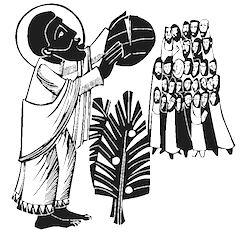
The Gospel gives us the answer: Christ is the bread from heaven, and every person who tastes this bread will live. He will have the real goods, not the worthless fake goods; and he will see the difference between the two, because he will see God’s goodness in Christ.
Here is the end of the story then: taste the bread from heaven and see the goodness of the Lord. Wisdom lies in this!


Art by Martin Erspamer, OSB
from Religious Clip Art for the Liturgical Year (A, B, and
C). This art may be reproduced only by parishes who purchase the
collection in book or CD-ROM form. For more information go http://www.ltp.org