
Getting Ready to Pray
There is the little truism that “Where ever you are, that’s where you are.” This is both a geographical and spiritualogical place.
The other day I woke up from a deep sleep and in that state of dazedness picked up the phone to stop the alarm clock’s ringing. Our consciousness is not always awake before our bodies.
One of the more difficult questions to answer honestly is this very one: how are you. When picking up a towel from the Fitness Center’s supply counter, the young students will always ask me, “how are you?” Often I answer that I will not know until I am halfway through my run. This is close to the truth.
We usually do not give the absolute honest answer when asked about how we are. Sometimes it depends on who is asking and how much information they can take and how much we want to give.
In praying, God is more present to us than we are to ourselves. Then question we ask is, “God, where are you?” The better question is, “Self, where are you?” The “how” and “where” of our spirits, memories, bodies, these are the beginning of our “finding God finding us.” God’s truth is meeting us in our truth and often we do not know where ours is.
We can be aware of where we once were or wish we were, but being awake to the simplicity and humility of our present, right-now self, this takes time and silence. Sometimes we answer the “how” question with a quick “fine, how are you”? The observant listener would know that we do this as an avoidance. When we are with God in prayer, we do well to sit in our own pew and allow ourselves to be met right there, in the where of our truth.
This week as we prepare to be met in the Eucharistic celebration, we will do well to go face to face with our truths as we and others meet us. We can answer the “How are you” questions a little more reflectively and honestly. When we do this, we just might find prayer more intimate and peaceful.
Some Thoughts
In the makeup of the human person there is always the progression or movement from idea to action, from charism to structure, from spirit to flesh. A group might get together with an idea or an interior sense of need. Human beings need some kind of form, some rules, or ways of proceeding. The early Christian community had been inspired at Pentecost and felt unified and eager to continue Christ’s mission.
What we hear in today’s First Reading is the beginning of structure.
The early apostles prayed devotionally and conducted communal gatherings to “break bread.” But there arose this little pastoral problem. Things were held in common, but the Greek Jews, a.k.a. the “Hellenists,” were experiencing their own needy ones not getting as much as the needy ones of the Hebrew Jews. There was inequality of distribution. What we hear is the solution. Seven Hellenists were chosen as a committee. As often has happened in the history of the Church, a pastoral problem created some reflection resulting in a teaching moment and a pastoral response.
The reading ends with a description of a kind of liturgy or ceremony of ordaining persons for specific tasks. This is the beginning of the “Serving Church” or the Deaconate. Their labors for the poor and neglected resulted in the community’s growing, because of their care for the needy.
We will be listening the next few weeks to verses from the Gospel of John and from what is called, “The Last Discourse.” On Holy Thursday we heard from this section which begins with the washing of the feet. These nine chapters are known as the “Book of Glory,” because in John’s Gospel the death and Resurrection of Jesus are the final and greatest display of God’s love for us in and through Jesus.
Jesus begins the four chapter discourse with the consoling words of today’s Gospel reading. In the previous chapter Jesus had announced that he was leaving them and they could not follow him. As if that were not enough, when Peter boasted that he would lay down his life for Jesus, he—Peter —heard the words about his going to betray Jesus.
What we hear is the very next verse, “Do not be troubled … ” Imagine hearing those two verses together. Ouch! A prediction of betrayal precedes these verses we hear in the Gospel today, not very easy to believe.
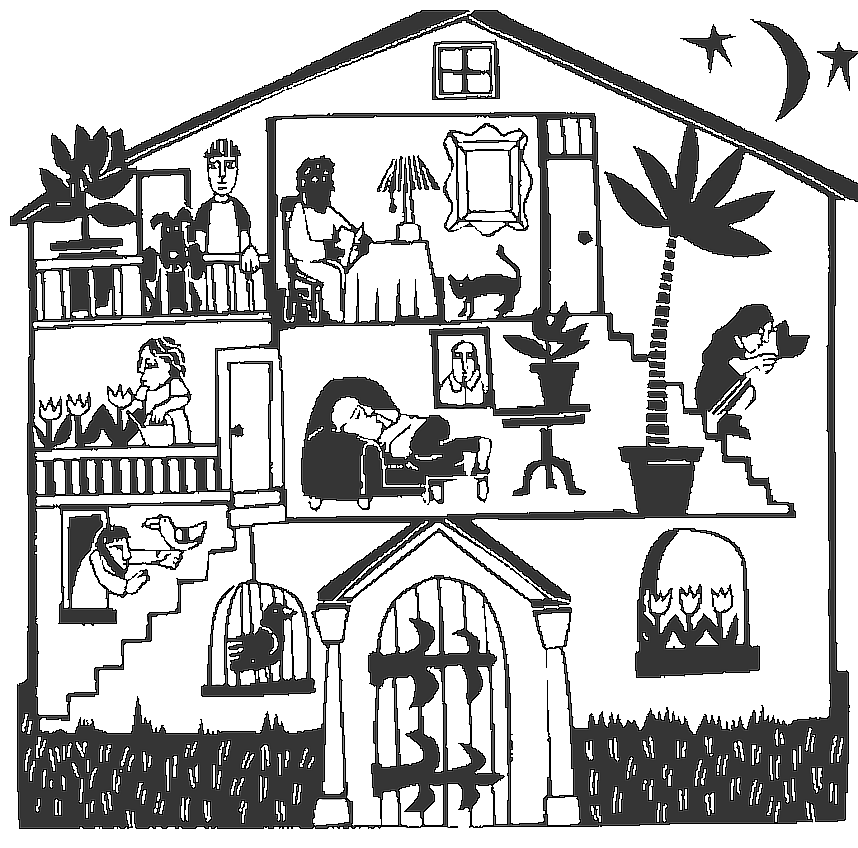
Many people find reading John’s Gospel confusing with all the “who’s who” and “Mine are yours.” It does take some pondering and study for sure, but there are some wonderful images and we hear of one, about God’s house. Jesus is going to make a place for his believing followers. Those who have entered through the “gate” of baptism and believe that he is “sent” into this world as the “way, the truth and the life” will find room in the eternal home.
In the previous chapter as well, Jesus encouraged them to “love one another” as he will do in the next chapter. Making room for each other will be a continuing sign of what God’s love means. In short, (finally) Jesus tells Philip and us, to have seen the roominess of the love of Jesus, even for his betrayers, is to have seen the expansive person of the commodious God.
Lord, let your mercy be on us, as we place our trust in you.
Psalm 33


